WordPress Themes: Who Do You Blame For Your Blog Not Working Correctly?

Who do you blame when something goes wrong with your blog?

Most of us will probably blame WordPress, yet have you ever thought that the problem could be that the theme of your blog is to blame because you’ve never changed it and it’s been retired?

Light blue image with the words 'WordPress Themes: Who Do You Blame For Your Blog Not Working Correctly?' in white text.
Is your blog’s theme causing the problems you’re experiencing with your blog?

Many problems can arise on blogs when a theme has been retired.

How Do I Find Out If The Theme I’m Using Has Been Retired?

You’ll see the following image on the themes page of your blog.

Image of a message from WordPress stating that a theme has been retired.
Has your theme been retired?

Go to your blog’s dashboard and click Appearance – Themes to determine if your chosen theme has been retired.

Can I Still Use My Retired Theme?

Yes, you can. WordPress won’t remove it from your site. However, when a theme is retired, it no longer appears in the list of themes available on WordPress.

Your retired theme may remain available for the lifetime of your site or blog, but it will no longer be fully supported by WordPress. It won’t receive any updates with new features; hence WordPress won’t guarantee it will always function correctly with their ever-evolving software. If anything goes wrong, it may not be possible to fix it.

You can still contact WordPress support so the Happiness Engineers can take a look, but support will be limited, and they’ll probably recommend switching to a newer theme. In addition, they won’t provide any CSS support for the retired theme.

Why Do Themes Get Retired?

Web technology updates make the visibility and functionality of some themes outdated.

Web design is an area that is continually evolving, thanks to trends, tastes, and new technologies. WordPress has to keep up to date with these changes and is at the forefront of wanting blogs to look fresh and modern.

Retired themes can make blogs look outdated, stale, and uninviting to visitors, especially if you’ve never changed your theme since starting to blog.

Themes may also be retired if their design has become old-fashioned or uses certain no longer supported features.

What Should I Do If The Theme I Am Using Is Retired?

You can continue to use it, but it may no longer be possible for WordPress to fix any issues you encounter.

Some of the issues I have found with blogs that are still using retired themes are –

  • I can no longer leave comments.
  • Pingback to the blog no longer work.
  • Pingbacks from the blog no longer work.
  • The gravatar image is no longer displayed.
  • The ‘Notify me of new comments via email’ box is missing.
  • Pressing the ‘like’ button no longer works.
  • New blog posts do not appear on the WordPress Reader.
  • Blog posts are no longer mobile or tablet-friendly.
  • Comments do not display correctly.
  • Images, photos and paragraphs do not display correctly.
  • Sharing buttons no longer work correctly.

In all cases, when I’ve checked the blog’s theme when these problems have happened, it’s an old, retired theme.

Some bloggers find workarounds when problems occur, but all this does is put off the inevitable that one day they will have to change the theme.

My recommended advice is to consider switching to a new theme to ensure your blog has a modern look and feel to its design.

If you’re not bothered about parts of your blog being broken, you may wish to continue using it until you are forced to change the theme. However, that’s not something I recommend.

Not only can finding a new theme be fun, but it can also boost your blog’s ranking.

How Do I Find A New Theme?

On the dashboard of your blog, go to Appearance – Themes. You’ll see all the WordPress themes available. For free themes, click the ‘Free‘ button in the top-right of the page.

You can also use the search field on the themes page to find a replacement theme. Click on the filter options below the search bar or type directly into the search field to filter by specific features or subjects or by the number of columns the theme natively displays to select a new theme similar to your retired theme.

Block Themes Vs Classic Themes

Block (or Full-Site Editing) themes are the new boys on the block.

WordPress recommends switching to a Block theme, as these are the future and what will be supported in the long term.

I have heard of some bloggers encountering problems switching to Block themes. It’s a long learning curve to get used to them, but WordPress has plenty of advice and help for switching to one.

Some bloggers who have already made the switch have reported that not only do their blogs run faster after switching to a Block theme, but problems they were experiencing with their blogs also disappear.

I recommend watching WordPress tutorial videos and reading their guidance page before switching to a Block theme. For information, click the links below.

Video Tutorials: Customize your Site or Blog

Using The Site Editor

Should you encounter problems switching to a Block theme, help is at hand.

  • Contact the WordPress Happiness Engineers by clicking on the ‘question mark’ icon (next to the ‘bell’ notification icon) in the top right of your blog’s dashboard.
  • Ask for help from your followers and other bloggers by writing and publishing a post or contacting a blogger directly.

Important Information: Do not activate a new theme unless you are absolulty sure you like the theme you have chosen, as it’s impossible to go back to a retired theme once you’ve activated a new theme.

Classic themes were created to work with the old Classic editor, but with the large drop in Classic editor users, WordPress has been retiring them, especially when they no longer work with new functionality software or when updates to the WordPress platform have been released.

Unlike Block themes, Classic themes are heavily loaded with CSS code, meaning many things can go wrong. Block themes are only lightly loaded with CSS code, so are less likely to break.

Currently, WordPress provides 54 Classic themes that are free to use and compatible with the Block editor.

To find current Classic themes, search for them by adding ‘Classic‘ to the search bar on the Themes page, and select ‘Classic Theme‘ from the dropdown menu that appears.

If the theme you’re currently using has been retired, I recommend you switch to one of the Classic themes if you do not want to switch to a Block theme. Doing this will fix some or all of the problems your blog may be experiencing.

If you still experience problems after switching to a current Classic (or Block) theme, report the problems to WordPress. How will WordPress know about a problem unless you report it? Don’t rely on other users reporting the problems you’re having with your blog.

Does WordPress have any plans for new Classic themes?

I asked WordPress the above question. Their response was –

‘No, and we doubt there will be as the industry shifts to the more modern and convenient Full Site Editing (Block) themes that remove most of the need to learn coding to create and customize your theme.’

Is WordPress retiring all Classic themes? If so, when?

Their response –

‘It’s likely, as the focus is shifted to the more modern approach. We do not have specific timelines for each theme or the ones available on our list at this moment.’

So I guess it’s a case of ‘watch this space.’

However, given that the Classic Editor plugin is still available, my guess is that WordPress will retain some of the Classic themes until they stop supporting the Classic Editor plugin. But the choice of Classic themes will become more and more limited as time passes.

I didn’t ask WordPress if there are any plans to stop supporting the Classic Editor plugin, although I have heard rumours that they plan to stop supporting it by the end of 2024.

Let’s wrap it up.

  • Problems may affect your blog because your theme has been retired.
  • WordPress may be able to fix some issues, but they will advise you to switch to a new theme if the theme you’re using is retired.
  • You can continue to use a retired theme you’re using, but it may not work correctly.
  • Once you activate a new theme, you won’t be able to go back to the retired theme you’ve been using.
  • Upon publication of this post, WordPress offers Full Site Editing (Block) and Classic themes.
  • All Classic themes are free to use.
  • There are no plans to introduce new Classic themes.
  • The number of available Classic themes will continue to diminish.

I’ve seen some bloggers say they will wait until they are forced to switch themes. Given that switching themes can be a complicated and time-consuming project, all that will do is make them panic when the time comes to switch. Don’t be one of them.

If the theme you’re using has been retired, switch now.

WordPress welcomes feedback on the new Block themes and encourages everyone to contact them with suggestions for improving them.

If you enjoyed this post and want more like it, enter your email address and click ‘Subscribe’ to stay up-to-date with my latest content.

To follow Hugh on social media, click the links below.

Layout, content, settings, and format might differ on self-hosted blogs.

Copyright @ 2024 hughsviewsandnews.com – All rights reserved.

5 Things You Can Do To Free Up Media Space In Your Blog’s Media Library.

‘Help! I’ve run out of media storage space on my blog and can no longer upload new photos, images or videos. What can I do?’

That was a question to me from Micheal, who blogs at Spo-Reflections.

Michael was happy to upgrade his WordPress plan to obtain more media space, but there are other things you could do if you find your blog running out of media space.

Light blue image with the words '5 Things You Can Do To Free Up Media Space In Your Blog's Media Library' written in white text.
Have you run out of media space on your blog? Here are 5 things you can do to obtain more.

1. Upgrade your plan.

WordPress currently offers 6 plans.

The amount of media storage space you get varies. Click the following link to see the plans – ‘There Is A Plan For You.’ Pricing is correct at the time of publication of this post.

Each plan provides the following media storage space.

Name of planStorage Amount
Free1GB
Personal6GB
Premium13GB
Business200GB
Commerce200GB
EnterpriseN/A

However, only upgrade your WordPress plan if you absolutely need to. Do not get into debt by upgrading unless you can afford it, as there are other things you can do to free up media storage space.

2. Resize the size of your images and photos.

One of the biggest reasons bloggers run out of media space is that they do not resize their images and photos before uploading them to their media library.

There are several ways you can reduce the size of images and photos. You can reduce them using photo editing software or via the tools of your device you use to blog.

I use an Apple iMac and can change the size of photos and images by clicking on ToolsAdjust size on the menubar of my desktop computer. I do this before uploading them to my WordPress media library.

I recommend reducing image and photo sizes to 900 x 675 pixels.

On a Windows computer, you can use Microsoft Paint. Open your image with that program, then click on Resize. You can find this option on the middle-right side of the “Image” section at the top of the Paint window.

The WordPress media library also has editing software, but please note that if you reduce the size of an image or photo using this tool, the original image is kept in your media library when you reduce the size of the picture – thus, you won’t have freed up any storage space.

Large images can also slow down your blog’s downloading speed, negatively impacting your blog’s search engine rankings and overall user experience. So, I recommend you always reduce the size of images and photos before uploading them to your blog.

3. Do not upload videos to your media library.

If you include videos in your blog posts, uploading them to your media library can take up vast amounts of space.

To overcome this problem and free up all the space they take up, upload your videos to YouTube. Then add the YouTube block to your blog post and include the link to the video in the block.

Image of the YouTube block on WordPress
Adding videos to your blog via YouTube helps free up media space for your blog.

Do this for any existing videos you have in your media library. Upload them to YouTube and add them via the YouTube block before deleting the original from your media library. This will free up large amounts of storage in your media library.

4. Delete images from your media library.

We can accumulate vast amounts of images and photos in our media library, many of which will become redundant.

Deleting these images will free up storage space. However, when you delete any images or photos in your media library, they disappear from the blog posts they appear on.

My blog post, ‘Are Your Old Blog Posts Damaging Your Blog? How To Stop It From Happening’ details why bloggers should delete old blog posts.

Deleting old, redundant blog posts containing images, photos, and videos frees up storage space. However, delete any images, photos and videos in your media library before deleting the posts.

If you’re unsure whether a post should be deleted, read my post, ‘Are Your Old Blog Posts Damaging Your Blog? How To Stop It From Happening,’ for advice.

5. Reduce the number of images and photos you add to blog posts.

While I recommend adding at least one image or photo to a blog post (because blog posts containing images get up to 70% more traffic), reducing the number of images and pictures will help save media space.

Before adding more images or photos, ask yourself if adding them to your post is necessary.

Let’s wrap it up.

  • Resize your images and photos before uploading them to your blog’s media library.
  • Upload videos to YouTube and use the YouTube block to show them on your blog posts.
  • Delete old images and photos from your media library, but remember to remove them from any posts first.
  • Do not resize images using tools in the media library, as this does not save storage space.
  • Consider deleting old blog posts that are no longer relevant.
  • Reduce the number of images and photos on blog posts. Ask yourself if they’re necessary.

How do you free up storage space in your blog’s media library? If you have any questions about this post, leave them in the comments section.

To follow Hugh on social media, click the links below.

If you enjoyed this post and want more like it, enter your email address and click ‘Subscribe’ to stay up-to-date with my latest content.

Copyright @ 2024 hughsviewsandnews.com – All rights reserved.
Adding Images Or Photos To Your Blog Posts? 4 Essential Things To Do.

Blog posts containing images and photos get up to 70% more traffic than posts without visuals. So why wouldn’t you use them in your posts?

Visual content is an essential component of any successful blog. Adding images, videos, and infographics to your blog posts can make your content more engaging and memorable.

An blue background image with the title of a blog post, 'Adding Images Or Photos To Your Blog Posts? 4 Essential Things To do' in white text.
Are you making any mistakes when adding images or photos to blog posts?

If you plan to include images or photos in your blog posts, there are four essential things to remember. These steps will help ensure your content is engaging and visually appealing while avoiding copyright issues.

1. Use High-Quality Images And Photos.

Always use high-quality images that are relevant to your post. Blurry or low-resolution images can detract from your message and make your blog appear unprofessional.

Additionally, using images that are not directly related to your topic can confuse readers and reduce the effectiveness of your post.

2. Ensure Images And Photos Are Not Copyrighted

Ensure you have permission to use any images and photos you include in your posts. This means sourcing images from websites offering free, non-copyrighted images (such as Pixabay) or purchasing the rights to use images from a stock photo website.

Not all images are free to use. And some that are free may only be free for a limited time. Always check the small print.

Don’t think you’ll ever get fined for using copyrighted images or photos. There are copyright bots continually looking for copyrighted images that have been illegally used and downloaded all over the web.

I know of two bloggers who have been fined for using images/photos on their blog posts that were not free to use.

To avoid copyright issues, use your own images and photos and watermark them before adding them to your blog posts. I use a free app called Photobulk to do this. Seeing a watermark is a great deterrent in persuading some thieves not to copy and use them.

Of course, if you’re not concerned about your photos and images being used by anybody else, you don’t need to watermark them.

3. Ensure Images And Photos Are The Correct Sizes.

Optimize your images for web use by compressing them to reduce file size.

Large images can slow down your website’s loading speed, negatively impacting your blog’s search engine rankings and overall user experience.

If you have limited space in your media library, not reducing the size of your images and photos will soon take up all your media space. When that happens, you won’t be allowed to download additional images to your blog unless you free up space or move to a plan that gives you more storage space.

I recommend reducing image and photo sizes to 900 x 675 pixels.

There are several ways you can reduce the size of images and photos. You can reduce them using photo editing software or your device’s software.

The WordPress media library also has editing software, but please note that if you reduce the size of an image or photo using this tool, the original image is kept in your media library when you reduce the size of the image- thus, you won’t save any storage space.

The newly edited image with the reduced size is added as a new file in your media library. You can always revert back to the original image by clicking on the image in the media library, selecting Edit, and then choosing the “Restore Original” button. If you’ve inserted an edited image into other published posts, reverting an image may break this image on those posts.

I use an Apple iMac and can change the size of photos and images by clicking on ToolsAdjust Size on the menubar of my desktop computer. I do this before adding them to my WordPress media library.

On a Windows computer, you can use Microsoft Paint. Open your image with that program, then click on Resize. You can find this option on the middle-right side of the “Image” section at the top of the Paint window.

However, as I mentioned earlier, you can also reduce the size of images and photos on WordPress. But only do this if your WordPress plan has a large storage space allowance.

  • To do this, ensure you view your media library in Classic view.
  • Click the edit image button on the image you want to edit.
Image showing the edit button of an image in the WordPress media library
Click the edit button.
  • Add the new dimensions in the Scale Image box and click the Scale button.
Image showing the new dimensions box and scale button on an image in the WordPress media library.
Add the new dimensions of your image.
  • Click the save or update button to save the changes.

Your photos and images will be reduced in size, but remember that a copy of the original is also kept, so you won’t save any storage space.

If posting to your site using the Jetpack App, the app can optimise images.

In the Jetpack app for iPhone, you can set the Max Image Upload Size so the original file is resized automatically when you upload it. This option can be found by going to My Site and clicking the profile icon in the top right, then choosing App Settings.

In the Jetpack app for Android, click on your profile icon in the top right corner and choose App Settings. There, enable Optimise Images to resize and compress images on upload.

4. Add information to your images and photos.

Don’t forget to include alt text and captions for your images.

Alt text is a description of the image that allows visually-impaired readers to understand what the image is conveying. At the same time, captions can add context and help readers engage with your content. This is especially important when participating in blog challenges such as Wordless Wednesday and Silent Sunday.

Screenshot of the Alt Text box, caption box and description box on an image in the WordPress media library.
Always add information about your images and photos.

Adding a description of the image or photo also helps with SEO searches.

  • Click the save or update button to save all the changes.

Following these four essential steps, you can create visually stunning and engaging blog content with images that stand out.

Let’s wrap it up.

  • Always use high-quality images and photos on your blog.
  • Never use images and photos that are copyrighted. You may be fined for doing so.
  • Use your own images and photos. That way, you won’t encounter any copyright issues.
  • Reduce the size of images and photos before loading them to your blog.
  • Alternatively, reduce the size of images and photos with WordPress’s tools in the media library, but only if you have a WordPress plan that offers a large amount of storage.
  • Always add information about images and photos before adding them to blog posts, as this allows visually-impaired readers to understand what the image conveys.
  • Adding a description of the image or photo also helps with SEO searches.

What do you use to resize images and photos for your blog posts? Do you always complete the details of images and photos in the Alt Text box? If you have any questions about adding images and photos to your blog, please leave them in the comments section.

To follow Hugh on social media, click the links below.

If you enjoyed this post and want more like it, click the ‘Subscribe’ button to stay up-to-date with my latest content.

Copyright @ 2024 hughsviewsandnews.com – All rights reserved.
Is Now The Time For WordPress To Remove The Like Button From All Blog Posts?

Do you remember how you felt when somebody first pressed the ‘like’ button on one of your early blog posts?

Does the ‘like’ button lose its appeal the longer you blog?

Do you notice who has clicked the ‘like’ button on any posts?

Is the ‘like’ button overrated?

Banner for the blog post 'Is Now The Time For WordPress To Remove The Like Button From All Blog Posts?'
Is it time to remove the ‘like’ button on your blog?

When I first started blogging, the ‘like’ button on blogs was something I thought was one of the best ideas about blogging.

Getting a ‘like’ on one of my posts gave me the best feeling. I thought anybody clicking the ‘like’ button had read my post.

For me, a ‘like’ indicated that somebody had taken the time to read what I had written. Yes, somebody in the big wide world had taken a few minutes to read and like something I had written.

It also motivated me to write more blog posts in the hope that they would attract even more ‘likes.’ Of course, if somebody also left a comment, that was a bonus!

The Like button doesn’t have any disadvantages, does it?

It was not long before I discovered that the ‘like’ button has disadvantages.

Some bloggers said that seeing too many ‘likes’ on a blog post makes them feel demoralised.

In turn, some users go on to delete or abandon their blog or develop ‘blogging envy’ at seeing how well other users are doing compared to themselves.

I know of one user who admitted that, for them, ‘the number of ‘likes’ was more important than the content’; in other words, they saw blogging as more of a popularity contest.

I have never envied seeing bloggers get hundreds of likes, but I understand why some bloggers may envy it.

As I grew the list of the blogs I followed, it wasn’t long before I realised that there was not enough time in my day to read, like, and comment on all the blogs I followed.

Given that some of the bloggers I followed were publishing new blog posts more than once a day I was soon overwhelmed and drowned in a sea of voices, all wanting my attention.

Doing the following is not a solution.

Rather than unfollow any blogs, I began to ‘like’ posts without reading them. I thought that doing this would indicate to the blogger (who had written the post) that I had read their post, and they, in turn, would continue to read and ‘like’ my posts. I was fooling both them and myself.

I soon discovered that other bloggers and readers were playing the same game because they were all in the same boat as me. Some users (including me) were misusing the’ like’ button.

A dilemma. What would you have done?

When I read a blog post about the death of somebodies wife, I asked myself what I should do. Should I click ‘like’ or just leave a thoughtful comment? After all, many readers had already clicked the ‘like’ button on the post. Did those who clicked it not read the post? How could they have pressed the ‘like’ button on a post about somebodies death?

That was the day I left my first comment without clicking the ‘like’ button. Now I’m doing it much more often. Do you leave comments without clicking the ‘like’ button?

Would you press the like button on a post that contained bad news or news of death?

What shocked me the most about the ‘like’ button.

What shocked me the most was why some bloggers and readers click ‘like’ even if they have not read the post. The most surprising reason why bloggers do it was that it ‘shows support’ for the blogger who had written the post, even if they didn’t have time to read it.

Really? Liking a post without reading it is a way to support other bloggers? Are there no better ways to support bloggers? Of course, there are.

Should you remove the ‘Like’ button from your blog?

I did it about four years ago and was inundated with messages from readers who said that they missed seeing the ‘like’ button. When I asked why they missed it, only a few responded, most saying that it was a way to say they’d visited even if they didn’t read the post or leave a comment saying so.

When I enquired what kind of comment they’d leave if they’d not read the post, most said a comment that confirmed they’d visited.

How would you feel if a reader told you they’d clicked ‘like’ on one of your posts, but they’d not read it?

Of course, there’s also the other side of the coin. Just because somebody hasn’t clicked the ‘like’ button does not mean they have not read the post.

Do you notice the gravatar icons next to the ‘like’ button?

These days, I take little if any notice of them. I’d go as far as to say that the ‘like’ button found at the end of blog posts should probably disappear for good.

Not everyone misuses the ‘like’ button. And remember, there are many other ways to support a blogger than clicking ‘like.’

For example, occasionally, leaving a blogger a valuable comment that adds value to their post. Or ask questions about their post’s content to show you’re interested in what they’ve written.

Don’t become a ‘comment spammer‘ by leaving empty comments hoping you’ll get comments back on your posts.

Of course, if you’re happy with the comments section on your blog containing boring comments that serve no purpose other than saying that those who left them visited your blog, click away.

Why do some bloggers press the ‘like’ button on their blog posts?

That’s a question I’d love to know the answer to. Can you help? Does it benefit the post or their blog or make it look odd?

Don’t have time to leave thoughtful comments?

Rather than spend small amounts of time leaving pointless comments on many posts, use the time you save not leaving them by leaving the occasional comment that adds value to the post. Most bloggers will value you more for leaving a thoughtful comment occasionally than leaving many comments that add no value.

One thoughtful comment that adds value to a post is worth hundreds of comments that add no value.

When and for what reasons do you use the ‘like’ button on WordPress? Have you ever misused it, and would you miss it if WordPress removed it from all blogs?

Before you answer my questions or leave a comment, this is what WordPress says about the ‘like’ button.

Let’s say you’ve found a particularly awesome post on WordPress.com. You’d like to tip your hat to the author and give him or her credit. At the bottom of the post, you see the Like button. Press it, and the author will know that you have acknowledged an exceptional, phenomenal blog post.

WordPress.com

Please feel free to answer any of the questions I have asked throughout this post by leaving me a comment. I look forward to hearing what you have to say.

Follow Hugh on Social Media. Click the buttons below.

Want more posts like this? Enter your email address and click Subscribe.

Copyright @ 2024 hughsviewsandnews.com – All rights reserved.
Should I Switch To The New Jetpack App Or Stay With The WordPress App?

I’ve been contacted by several bloggers asking the question in the title of this post.

In March 2023, the WordPress app that many of us are familiar with will lose many key features. For example, you’ll no longer be able to access the WordPress Reader or view your blog’s stats.

But fear not because all the features the WordPress app bring have been transferred to the new Jetpack app.

Banner for the blog post 'Should I Switch To The New Jetpack App Or Stay With The WordPress App?'
Which app should I use?

Which app should I use?

If you want access to all the WordPress features you’re used to, switch to the new Jetpack app.

If you only want to focus on the basics of writing and publishing and have no interest in your blog stats, notifications of comments, menus and the WordPress Reader (to name a few), stick with the WordPress app.

Can I use both apps?

It’s not recommended that you use both apps. Managing your blog across both apps is unsupported and may lead to issues such as data conflicts. So I’d recommend sticking to one.

What features does the Jetpack app have?

  • Posts
  • Pages
  • Media Library
  • Comments
  • Site Settings
  • Stats
  • WordPress Reader
  • Notifications
  • Activity Log
  • Jetpack Social
  • Jetpack Backup
  • Jetpack Scan
  • Menus
  • People
  • Themes

With the Jetpack app, you’ll benefit from powerful tools to manage and build your blog.

Is the Jetpack app free?

Yes. There are no additional costs for using the Jetpack app.

What features does the WordPress app have?

From March 2023, only the features listed below will be available on the WordPress app.

  • Posts
  • Pages
  • Media library
  • Comments
  • Site Settings

How do I make the switch to the Jetpack app?

  • First, ensure you have the latest version of the WordPress app installed and are logged in to it.
  • If you’ve had (or get) an email from WordPress asking you to choose which app to use, click the link in the email to download the Jetpack app. If you’ve not had the email, click here to download the Jetpack app.
  • Once the app has been downloaded, open it, and you’ll be automatically logged in with all your data and settings in place. All your posts, pages, media library and anything else you have on your blog will also be transferred.
  • Remember to delete the WordPress app.

Any questions about switching to the Jetpack app? Leave them in the comments section.

Follow Hugh on Social Media. Click the buttons below.

Want more posts like this? Enter your email address and click Subscribe.

Copyright @ 2024 hughsviewsandnews.com – All rights reserved.
Do You Crave More People To Engage With On Your Blog? Check These Settings Now.

How easily can all visitors engage with you on your blog?

Is it as easy as you think it is?

Banner for the blog post 'Do You Crave More People To Engage With On Your Blog? Check These Settings Now.'
Did you know that you could be preventing some visitors to your blog from leaving you comments?

After receiving an e-mail from Jean, who blogs at DelightfulRepast.com, who had seen one of my posts at the Senior Salon Pitstop weekly linky party hosted by Esme and Julie, I was somewhat concerned when she mentioned that it wasn’t easy for her to engage with me on my blog.

Jean explained that she didn’t want to leave her e-mail address, create a WordPress account or use social media to be able to leave me comments. I understand why she didn’t want to leave any of those details. After all, our information is private and shouldn’t be given out if we don’t want to give it out.

WordPress offers ‘Discussions‘ options where users can decide how easily readers can engage with them without leaving any personal details. I thought I already had this option switched off, so nobody needed to leave any personal details, and I was right, but it didn’t explain why Jean thought she had to leave her personal details if she wanted to comment on my posts.

Upon further checking my discussion settings, I saw where the confusion was coming from and want to highlight it so those who wish to engage with me without personal details can still leave comments knowing they do not need to give any personal information.

Let’s Look At The Discussion Settings On WordPress.

  • Ensure you’re viewing your blog’s dashboard in the Default view. To do this, click on the View button in the top right of the screen when viewing your blog’s dashboard.
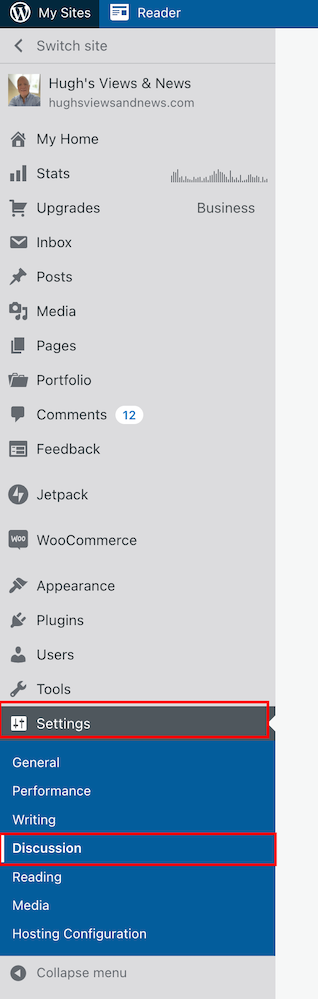
  • Go to Settings – Discussion.
Screenshot highlighting the discussion setting on the dashboard of a WordPress blog
Make sure you’re viewing your blog’s dashboard in the Default view.
  • On the Discussions Settings page, look for the Comments box.
Image highlighting the Comments settings on the Discussion Settings page of a WordPress blog.
Look for the comments settings box.

As you will see from the above screenshot, I have turned off both the ‘Comment author must fill out name and e-mail‘ and ‘Users must be registered and logged in to comment‘ options. So why wasn’t Jean able to leave me a comment?

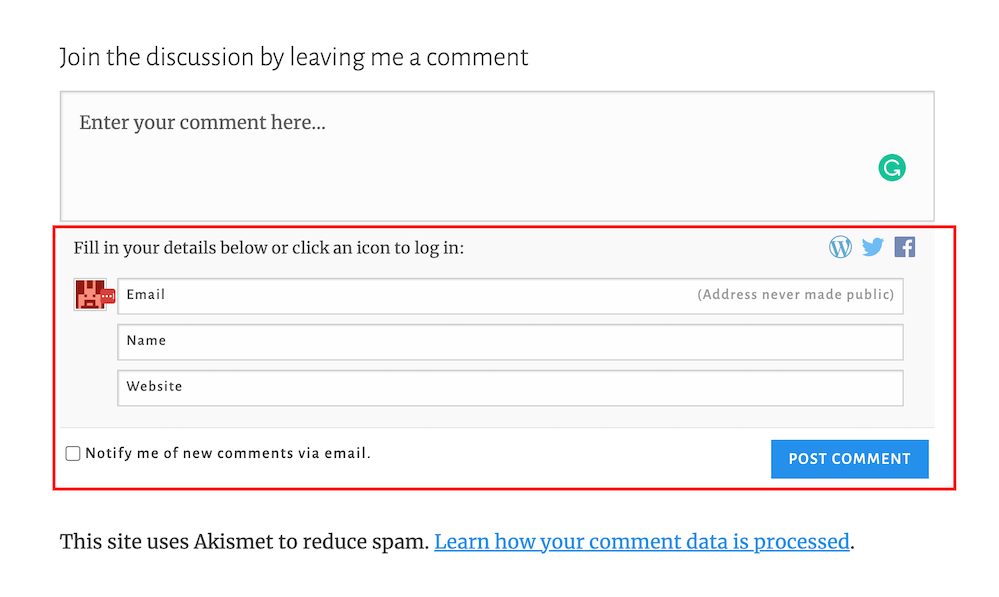
It seems that, for whatever reason, in their wisdom, WordPress has decided to still show visitors a login box when these options have been switched off. This is what Jean and visitors who are not logged in see.

Screenshot highlighting the login box when wanting to leave a comment on a WordPress blog.
The log in box tricks visitors into believing they have to leave personal details to be able to leave comments.

And this is what WordPress say –

Comment author must fill out name and e-mail: When this setting is on, anyone leaving a comment will be forced to leave a name and a valid e-mail address. If the setting is off, visitors can leave anonymous comments. While your commenters do not have to fill in the e-mail field if you’ve turned this setting off, it will still be visible to them when they comment.

So I understand why Jean thought I wasn’t making it easy for her to engage with me.

If you only want readers to engage with you who must leave their name and email address, ensure you have this option switched on.

If you only want comments from readers who are logged in and registered, ensure you have the ‘Users must be registered and logged in to comment‘ setting switched on.

If you want comments from both, ensure both settings are switched on.

However, if, like me, you’re happy to allow anyone to leave you a comment, then switch both of these settings off.

Don’t forget to click the ‘Save‘ button in the Comments settings box if you make any changes.

Are There Any Disadvantages To Switching These Discussion Settings Off?

The main disadvantage is that it could open the gates for spammers and trolls to leave you comments. However, the Akismet antispam software on WordPress catches and places the majority of spam into your blog’s spam folder, so you’ll never see it unless you check what’s in it.

Further down on the Discussion Settings page, there is more help to filter out spam and troll comments.

  • Look for the ‘Before A Comment Appears‘ box, and you’ll see these two options.
  1. Comment must be manually approved: If this setting is on, all comments will go into moderation, and they will need to be approved by you before appearing on your blog.
  2. Comment author must have a previously approved comment: If this option is on, any visitors that have had a comment approved on your blog in the past will get a free pass through approval and only comments from new visitors will go into moderation.

As you will see from the following screenshot, my blog is set for manually approving all comments before they appear on any of my posts.

Screenshot highlighting the 'Comments moderation' settings on WordPress
Decide which level of protection you want to stop the comments of spammers and trolls from appearing on your blog posts.

This helps me stop unprofessional, rude, nasty comments from appearing on any of my posts, even if they’re from somebody who has previously left a friendly comment.

My thanks to Jean for contacting me about discussion settings on blogs. And apologies for the confusion WordPress causes in insisting a login box shows when visitors do not need to leave any personal details when wanting to engage or leave a comment.

If you see a login box or are asked to leave your name and email address when leaving a comment, try leaving a comment without filling in personal details or logging in. If the blogger you’re engaging with has switched off the ‘Comment author must fill out name and e-mail‘ and ‘Users must be registered and logged in to comment.‘ options, your comment will go through.

If either or one of those options is switched on, you’ll need to follow the instructions to be able to leave a comment.

Let’s wrap it up.

  • Check the discussion settings on your blog to see if you’re preventing visitors from leaving comments.
  • Decide whether you want only certain visitors to be able to leave comments or if you’re happy for all visitors to leave comments.
  • The majority of spam comments will go straight to your spam folder. Remember to empty your spam folder regularly.
  • To stop comments from trolls appearing on your blog posts, switch on the ‘Comment must be manually approved‘ setting.
  • Consider whether comments from those who have previously left you a friendly comment do not need to be manually approved by you.

If you have questions about the discussion settings on your WordPress blog, leave them in the comments section.

Layout, content, settings, and format might differ on self-hosted blogs.

Follow Hugh on Social Media. Click the buttons below.

Want more posts like this? Enter your email address and click Subscribe.

Copyright @ 2024 hughsviewsandnews.com – All rights reserved.
5 Powerful Blogging Tools That Will Get Your Blog Noticed

Getting readers to engage with you by leaving comments on your blog posts is something many bloggers crave.

And when those comments clearly show that your post has been read, it’s one of the best feelings in the world.

However, once you get visitors reading your posts and leaving comments, you need to do all you can to ensure they keep coming back.

Writing good quality posts that make your readers want to engage with you and each other is one way to keep your readers returning, but you also need to ensure they can easily find your other similarly themed posts, which are often buried deep in your blog archives.

Banner for the blog post, 5 Powerful Blogging Tools That Will Get Your Blog Noticed
Need more readers and followers? These 5 blogging tools will help

Here are five blogging tools that work for me. Not only do they give my readers a way of finding more similarly-themed content, but these tools have also helped bring me many new readers and followers.

1. The Search Bar

The other day, I was writing a new blog post and wanted to include links to some posts I had read on other blogs.

However, try as I might, I couldn’t find one of the posts I wanted to link to. Even worse, there was no search bar on the blog concerned.

It wasn’t long before I gave up looking for that blog post. I didn’t have the time to find it.

You can make it easy for readers to find what they are looking for by including a search bar on your blog.

Does your blog have a search bar? If not, WordPress has a ‘search’ widget. Click here to find out how to install one.

Once you’ve installed a search bar, open up one of your blog posts and check you are happy with its position. Ensure it’s visible and easy for visitors to find. The search bar on my blog is the first widget on my widget bar to the right of all my blog posts.

Remember, too, that you can use the search bar when looking for your own posts. You can save yourself a lot of time by doing this instead of scrolling through all your blog posts on your blog’s dashboard.

2. The Menu Bar

Navigation is of prime importance on any blog. Make it difficult for visitors to navigate or find more content, and they’ll probably give up and never return.

That’s why it’s essential to have a menu bar on your blog.

A menu bar allows your readers to check out what is on your blog and helps direct them to other parts of your blog they’d like to explore.

Many bloggers can be frightened by including a menu bar on their blog or adding items. However, it’s an easy and straightforward process.

Click here for details on how to set up a custom menu bar on your WordPress blog.

However, don’t overload the menu bar on your blog, as it can look overwhelming. And ensure you keep it updated and check that everything works on it.

3. The ‘Contact Me Page

Just imagine another blogger, a magazine editor, or somebody from your local radio station wanting to contact you to invite you to write an article or appear on a show. How exciting would that be? But they can’t find a way of reaching you privately!

Not everyone wants to leave a comment when they want to invite you to write a guest post, be interviewed, or ask you to appear on a show. If you don’t have a ‘contact me’ page, and nobody can contact you privately, then they’ll probably move on and give that opportunity to somebody else.

On the menu bar of my blog, you’ll see a ‘Contact Hugh’ button. That’s how people can contact me privately.

I get lots of people contacting me every week. As a result, I’ve written guest articles, appeared on radio shows and recorded podcasts, all of which have allowed me to promote myself and my blog. In return, I’ve got hundreds of new readers and followers to my blog.

Make sure you’re contactable. Click here to find out how to set up a ‘contact me’ page.

4. The ‘About Me’ Page

Ever since my early days of blogging, I’ve been told that many new blog visitors will want to learn a little about the blogger behind the blog before deciding whether to follow.

When I visit a new blog, I first look for an ‘about me’ page to learn more about the blogger.

If the blogger doesn’t have an ‘about me’ page or it’s difficult to find, I’m more likely to move on than check out the rest of their blog.

If you do have an ‘about me’ page, ensure you allow new visitors to introduce themselves by allowing them to leave a comment on it. And don’t forget, a friendly reply is more likely to keep that visitor returning to read your posts.

Click here for details on setting up an ‘About Me’ page and what to include.

5. The Gravatar

The image that appears next to all comments is known as a Gravatar. A gravatar is created for you as soon as you leave your first review or comment on the internet.

How many times have you clicked on the gravatar image of somebody who has left an excellent comment on a post and not been able to find their blog details? Frustrating, isn’t it, especially when you think it may be a blog you’d like to follow.

Unfortunately, one of the biggest mistakes many bloggers make, as soon as their gravatar is created, is they forget about it. Many don’t realise they can add images and leave links to their blog and social media accounts on their gravatar.

If a reader then clicks on your gravatar, they’ll see the links to your blog and social media accounts and be able to visit them. That means more visitors to your blog and social media accounts which could result in more followers.

Click here to find out how to add links to your blog and social media accounts to your gravatar.

Let’s wrap it up

  • Many blogging tools can help readers notice your blog and keep them returning.
  • Make sure you have a Search Bar on your blog to help visitors find other content.
  • Ensure your blog includes a menu bar, but don’t overload it with too many items.
  • Ensure the links on your blog’s menu bar all work. Check for broken links at least once a month and fix any that have become broken.
  • Ensure your blog has a page where readers and visitors can contact you privately. Not everyone will want to leave a comment inviting you to write a guest post or to appear on a radio show or podcast.
  • Many new visitors want to know a little about the person behind the blog before deciding whether to follow. Tell visitors a little about yourself on an ‘about me’ page.
  • Ensure your Gravatar has links to your blog and social media accounts.

This is an updated version of a post originally published on Hugh’s Views And News in September 2018

What powerful blogging tools do you use on your blog, and why do you use them? Share them with us by leaving a comment.

Copyright © 2022 hughsviewsandnews.com – All rights reserved.
4 Tips For Housekeeping Your Blog And Improving Its SEO Rating

Performing housekeeping on your blog has many benefits. After all, who doesn’t want their blog to look like a friendly, easy-to-use and inviting place old and new visitors will want to keep coming back to?

If you’re a blogger looking to expand their readership, performing housekeeping on your blog is something you should seriously consider.

But what blog housekeeping jobs should you consider doing?

Banner for the blog post '4 Tips For Housekeeping Your Blog And Improving Its SEO Rating
This is why blog housekeeping is essential.

During a 4-day heatwave last month, I couldn’t venture outside, so I took the opportunity to do some blog housekeeping. Here’s what I did.

1. Delete old, out-of-date blog posts.

I always feel that old, out-of-date blog posts that can not be updated or rewritten do nothing but drag down my blog.

They hang around like some uninvited members of the family you hardly ever see or have contact with. You know they are there but feel afraid to ask them to leave.

I had over 400 blog posts on my blog, some of which were doing nothing apart from attracting spam comments. They were dead ducks. They were not attracting any new views, visitors or comments.

I ended up deleting over 80 posts. Not only did I feel good getting rid of what I considered clutter, but it made my blog look much better with no more outdated information.

Some bloggers claim that deleting old posts is not a good idea because they can look back and see how much they have improved since those early posts. I disagree! When you’re somebody who never goes back to read old posts, mainly because you don’t have the time to do so, deleting these old blog posts is like cutting away the string tied to the brick holding your blog down.

2. Fixing broken links.

A downside of deleting old blog posts is that any pingback and links you have to them will become broken.

I used Broken Link Check to run a report showing me broken links on my blog. It’s free to use.

Since SEOs like Google rank blogs that have broken links lower, cleaning up and fixing broken links is a job every blogger should consider.

That first broken link report could be long and overwhelming, but once you start running a broken link report every month, you’ll soon conquer that job.

Fixing broken links was the best bit of blog housekeeping I did because it improves your blog’s overall ranking, meaning more traffic and visitors to your blog.

3. Categories and tags

When I checked how many categories and tags I had on my blog, I was shocked by the number.

What amazed me was that many categories and tags were no longer active. Like some of my old blog posts, they were deadwood.

Checking which categories and tags are no longer active is easy.

Follow this guide.

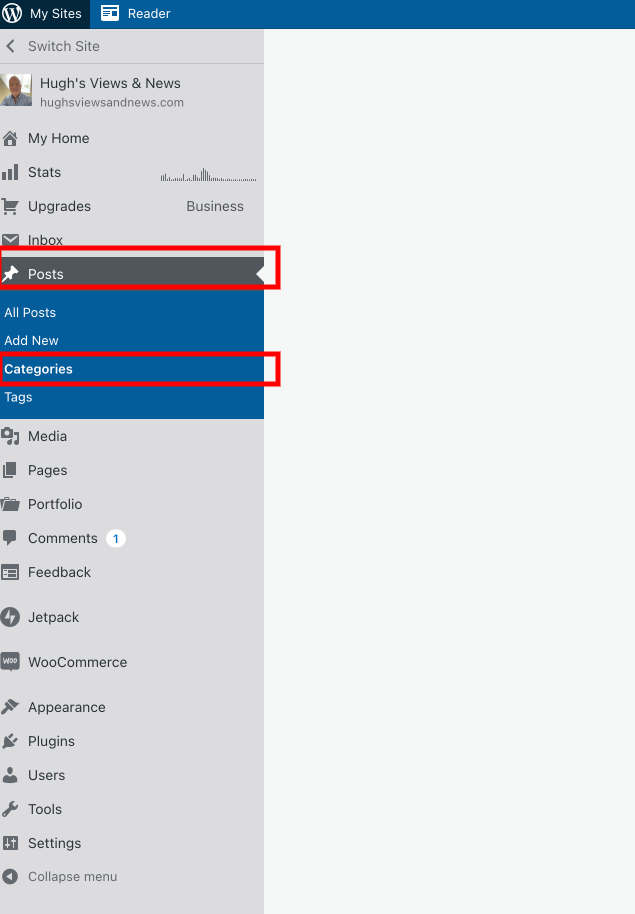
  • On your blog’s dashboard, click on Posts and then Categories. (Click on Tags to manage Tags).
Image highlighting where to manage categories and tags on your WordPress blog
How to manage categories and tags on your WordPress blog

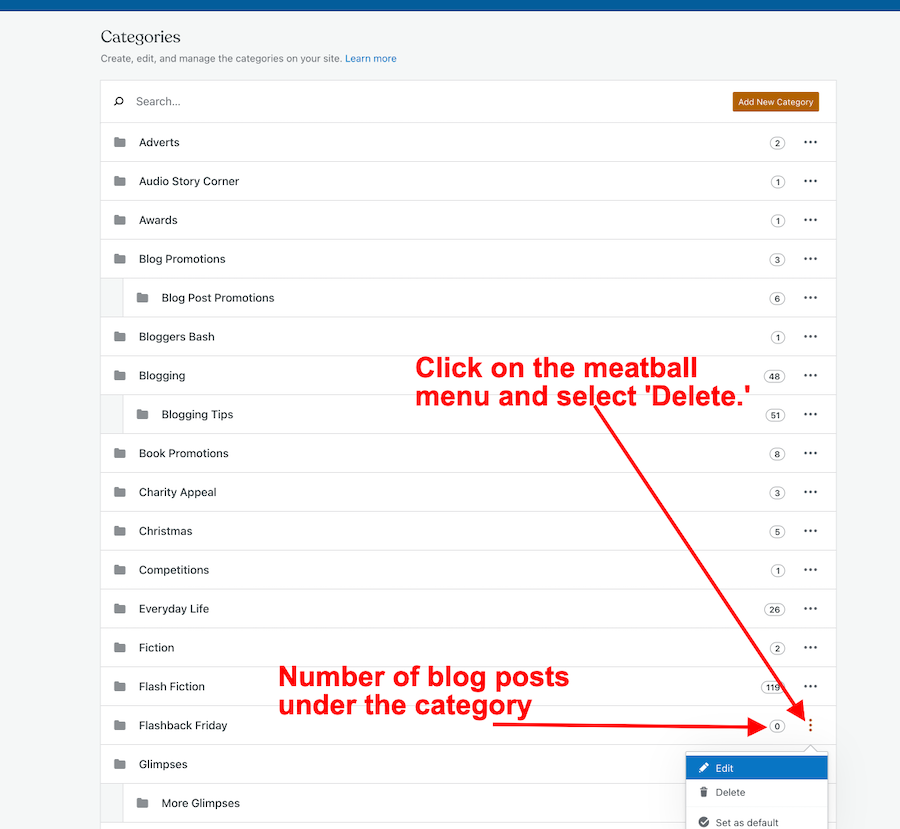
A list of all your categories will show how many posts you have under each category.

  • To delete a category, click on the meatball menu next to the number and click on ‘delete.’
Image showing how to delete categories on a WordPress blog
How to delete categories on your WordPress blog

Follow the same process for managing the Tags on your blog.

4. Menu Bar

I also took the opportunity to tidy up the menubar on my blog. Although it was not what I considered ‘top heavy’, I moved some items to sub-categories.

Here’s an example. I moved some fictional stuff to sub-categories under ‘Fiction.’ When you hover over ‘Fiction‘ on the menu, you’ll see the sub-categories pop up.

Blogs with top-heavy menus can look overwhelming and messy to visitors.

For more information about menus on your blog, see ‘Menus‘ by WordPress.

Once you start housekeeping your blog, it will make you feel much more positive about blogging.

Try and get into the habit of housekeeping your blog at least once every six months, although I’d recommend running a broken links report at least once a month.

Let’s wrap it up

  • Performing housekeeping on your blog is something every blogger should perform at least once every six months.
  • A well-kept blog is one that old and new visitors will want to keep returning to.
  • Fixing broken links on your blog will improve your blog’s SEO rating.
  • Run a broken link report for your blog once a month. Fix any broken links.
  • Delete categories and tags that are no longer being used on your blog. Too many categories and tags can confuse readers.
  • Delete old out-of-date blog posts, especially if all they are doing is attracting lots of spam.
  • Try and keep the menu of your blog to a minimum. Top-heavy menus can look messy and overwhelming.

How often do you perform blog housekeeping? What do those jobs involve? Do you have any simple tips for housekeeping your blog? Share them in the comments.

Remember that a well-kept blog is a positive and friendly place for your visitors and readers.

Follow Hugh on social media. Click on the links below.

Copyright © 2022 hughsviewsandnews.com – All rights reserved.
79 Ways To Kill Your Blog

Have you ever killed your blog?

Did you know that a blog can be killed other than by just deleting it?

While not all of the items on the following list will kill your blog instantly, some are what some call slow burners, where the killing of your blog will take much longer.

Banner for the blog post '79 Ways To Kill Your Blog'
Are you thinking of killing your blog?

Are you responsible for doing any of these to your blog?

  1. Don’t have an ‘about me’ page on your blog.
  2. The ‘about me’ page takes visitors more than a minute to find.
  3. The ‘about me’ page starts with these words – ‘this is an example of an about me page…’
  4. The number of followers is more important to you than what you write and publish.
  5. Publishing too many poor-quality posts due to rushing them.
  6. Believe you have to publish content several times daily; otherwise, nobody will visit your blog.
  7. Have links on your blog that you have no idea are broken or can not be bothered to fix.
  8. You do not respond to comments.
  9. You do not respond to questions or queries.
  10. Don’t allow anyone to leave comments on your blog.
  11. Ignore your readers.
  12. Do not treat visitors to your blog as guests.
  13. Don’t give yourself a name by which you can be addressed in the comments section.
  14. Do not read other blogs.
  15. Do not leave comments on other blogs.
  16. Believe that blogging is going to make you rich.
  17. Believe your blog will make money within the first year.
  18. Leave links with no relevance (usually to your own posts) on the posts of other bloggers when not invited to do so.
  19. Don’t believe you need to promote your blog.
  20. Refuse to use social media to boost your blog posts.
  21. Refuse to keep up to date with blogging technology and changes.
  22. Think readers will find you rather than you find your readers.
  23. Do not use enough ‘white space’ between the paragraphs in your blog posts.
  24. The paragraphs on your posts are too long and blocky (more than 5 sentences long).
  25. Have no way readers can contact you on your blog other than by leaving a comment. (No ‘contact me’ page).
  26. Do not thank people for sharing your posts on their blogs.
  27. Do not use images and/or photos in any posts.
  28. Use images, photos and words (including lyrics) on your blog which are copyrighted and not free to use.
  29. Do not ask permission to use photos and/or images owned by other bloggers before using them.
  30. Ignore all copyright advice.
  31. Respond to constructive, negative comments in an unprofessional and unfriendly manner.
  32. Allow other bloggers to spam your blog with links that have nothing to do with the post’s content.
  33. Keep begging other bloggers to reblog your posts, visit, or follow your blog.
  34. Leave worthless comments on other blogs.
  35. Leave worthless comments on other blogs which clearly show you’ve not read the post.
  36. Do not take time to edit posts before publishing them.
  37. Do not preview your posts before publishing them.
  38. Inundate followers with too many posts in a short space of time instead of scheduling them out.
  39. Respond to comments left by trolls in the comments section of your blog, where all can read them.
  40. Allow trolls to leave comments on your blog.
  41. Allow trolls to attack other bloggers who have left comments.
  42. Personally attack other bloggers in the comments section on your own or different blogs.
  43. Steal the ideas of other bloggers and publish them on your blog as if the content is original and has been written by you.
  44. Fail to maintain and house-keep your blog regularly.
  45. Keep reblogging or rescheduling your own posts which are less than a few months old.
  46. Do not have a ‘landing’ page that will keep visitors returning.
  47. Ignore advice and feedback from other bloggers.
  48. Believe that blogging will only take up a few minutes of your time every week.
  49. Wake up and dread opening up your blog because of all the comments you will need to reply to.
  50. Keep telling your readers that you are giving blogging up, and keep coming back.
  51. Allow blogging to stress you out.
  52. Allow blogging to make you feel guilty.
  53. Your blog and/or blog posts are poorly laid out.
  54. Choose a font and background combination that makes it hard for visitors to read your posts.
  55. Fail to categorise all your blog posts (including reblogs).
  56. Fail to add ‘tags’ to your blog posts.
  57. Don’t understand ‘pingbacks’ and how to use them.
  58. Have no ‘search’ bar on your blog.
  59. Have a menu that is too top-heavy, making it overwhelming to readers.
  60. Fail to add your blog details to your gravatar.
  61. Fail to connect your social media accounts to your blog.
  62. Have pop-up boxes on your blog that can not be removed unless somebody subscribes to your mailing list.
  63. Have pop-up boxes on your blog which keeps popping up every time someone visits or until they have subscribed to your mailing list.
  64. Keep suffering from blog envy when you read a post you’d wish you’d written.
  65. Regularly publish posts that tell your readers to buy your book(s) or other products and services you offer rather than allow them to decide if they want to buy them.
  66. You believe that blogging is all about the number of blog posts you can publish daily rather than what you are writing about.
  67. You think you have the power to read and comment on every new blog post on all the blogs you follow.
  68. Fail to update your readers that you are about to take a blogging break and how long it will last.
  69. Lose motivation and a desire to continue blogging when your blog stats take a nosedive.
  70. Believe that everyone will enjoy reading every post you write and publish.
  71. Believe that all your followers will read and comment on all your posts.
  72. Get upset when your blog loses followers.
  73. Argue with bloggers and readers for failing to read and comment on all your blog posts.
  74. Follow other blogs in the hope that they will follow back before unfollowing them again.
  75. Believe all your readers will agree with everything you say in your blog posts.
  76. Think nobody will dare to disagree with what you have to say by leaving a constructive comment telling you why they disagree.
  77. Criticise other bloggers behind their backs (in the comments section of your own blog or on other blogs) for wanting to help other bloggers.
  78. Maintain too many blogs, thus spreading yourself too thinly.
  79. Fail to take some time away from blogging (knowing that you need to) because you believe the blogging world can not survive without you.

What about you? What would you add to the list? How would you kill your blog other than by deleting it?

This is an updated version of a post I wrote and published in 2017.

You can find the answers to solving many of the above issues by clicking on ‘blogging tips’ in the menu at the top of my blog, but feel free to leave any questions in the comments section. I’m always happy to help.

Whatever you do, keep blogging fun!

Copyright © 2022 hughsviewsandnews.com – All rights reserved.
A Safe Place For Keeping #flashfiction

“It may look old and unused, but this is where they are kept.”

“You better be right, Sargent. It has taken us a long time not only to find this place but also to get here. Our troops need to rest tonight. I recommend we rest and plan our attack in the morning.”

***

12 hours later.

“We’re lucky to have found somewhere they think it is safe to store their data. Most of them never think twice about losing everything. Not everything is safe, but they should have done all they could to keep it safe and secure. The troops are ready, Commander.”

‘Good. On my command, we will begin the attack and wipe out most of the world of blogging from the face of this planet. We may be small and invisible to most, Sargent. Still, we are evolving and becoming more resilient against whatever virus software they throw at us.”

“Commander, let us hope that not many of them have ever backed up their blogs. And of those that do, let us hope they did it once and then forgot to do any further backups. Troops, on my command, let us attack and infect WordPress. ATTACK!”


Written in response to the #writephoto challenge hosted by Sue Vincent at Sue Vincent’s Daily Echo.

Layout, content, settings, and format might differ on self-hosted blogs.

Follow Hugh on social media. Click the buttons below.