
How To Avoid Soaring Blogging Overload: 4 Helpful Ways

Just a heads-up: This blog post might make you think I’m talking about you.

A couple of years ago, the following post debuted on this blog.

7 Common Mistakes To Avoid When Deciding Whether To Follow A Blog

It got people rethinking why they follow particular blogs. And that was my aim. Job done! Or so I thought.

It won’t come as a surprise that, having already read many posts this year where the writer outlines how they are already feeling overwhelmed and guilty about not being able to keep up with reading, commenting, and writing posts (and we’re only a few days into the 2026), I thought it a good point to say a few things that some bloggers find difficult to talk about.

Is this you?

Not only is following too many blogs something that can have an adverse effect on your mental health, but it can also have a negative effect on your writing and creativity.

Some people act immediately when they start to feel overwhelmed, stressed, or guilty about blogging, but sadly, some leave the world of blogging, sometimes without giving any notice of their intention to do so.

Of course, some people also give up blogging on a positive note.

As I already mentioned, following too many blogs is one of the biggest pitfalls of blogging because many bloggers believe they have to follow every blogger that follows them, read their posts and leave comments on every post. Sure, some of those bloggers only ever leave short, non-engaging comments more as proof they’ve visited, but sadly, some go on to abandon their blogs when it all becomes too much.

Let me be clear. If anyone suggests it’s only polite to follow the blogs of everyone who follows your blog, they are talking nonsense. If I took that advice, I’d be following over 7,000 blogs. Can you imagine how overwhelming that would be and the effect it would have on my mental health, especially if I felt I had to read and comment on every post?

Thankfully, I only read and comment on posts that interest me.

Before following any blog, ask yourself these questions.

1. How often are new posts published?

The frequency at which posts are published is important. Some bloggers publish a new post once a month; others publish weekly; some publish daily; and then there are those who publish more than one post a day.

I once followed a blog where the host was publishing up to five new posts daily.

I could have ignored how often she published new posts, but because I found some of her posts interesting and she was following my blog, I felt obliged not only to follow her blog but also to read and comment on all her posts. Yes, those comments were short and non-engaging because I was not able to keep up.

This led to guilt when I missed any of her posts, left comments only to prove I visited and to feeling overwhelmed by it all.

Check how often posts are published before pressing the ‘subscribe’ button. If posts are published daily, and that’s too much for you, consider not following or do not feel obliged to read all the posts.

If you receive email notifications for new posts, consider getting one email a week with the posts they publish. Yes, there’s an option for that. You can then choose which of those posts you want to read.

How To Change How often You receive New Post Notifications

On the ‘Manage Subscriptions‘ page of your blog (under the ‘Reader‘ button), click on the three dots (Kebab menu) next to any of the WordPress.com blogs you follow and choose how frequently you get email notifications of new posts.

The choices are Instantly, Daily or Weekly.

An image highlighting the settings for changing the frequently of new post notifications from WordPress
Click the three dots (kebab menu) then select how often you receive new post emails

Consider getting new post notifications via web and mobile notifications if getting email notifications become too overwhelming.

If you are happy with the frequency of new posts, by all means, subscribe and enjoy.

2. Is the content interesting enough?

Time is something many of us cannot manage when reading blogs, usually because we feel we do not have time to read everything, yet we feel obliged to and often leave a comment as proof. It’s a surefire way to get yourself on a slippery slope toward blogging burnout.

If none of the content interests you, don’t feel obliged to follow or read.

Don’t become a ‘ghost’ follower by subscribing to blogs you know you’ll never visit. After all, would you read a book on a subject that did not interest you? Be honest and ask yourself, ‘will I actually read this blog, or will it just add guilt to my unread list?

Time is precious, and wasting it on reading content you have no interest in is one of the main blogging mistakes you can make.

Spend time on reading content that interests you and which may inspire you to leave genuine, thoughtful comments.

Leaving a thoughtful, genuine comment occasionally far outweighs the impact of posting brief, unengaging comments on every post simply to show you were there. Make your comments count, ensuring that “thank you” isn’t the only response that resonates.

Thoughtful comments show you are interested and want to engage. Short, non-engaging comments simply prove you visited. They do not prove you read the post.

And remember that if a blog you follow publishes posts on various subjects, you are under no obligation to read everything they publish. Read only what interests you.

3. Does the host look after their blog?

  • Would you shop on a website with lots of broken links, a poor layout, or where you have difficulty finding what you are looking for?
  • Would you follow a blog that is broken because the host keeps blaming WordPress or anybody else but themselves for the faults?
  • Would you follow a poorly designed blog or one full of errors, broken links, and no sense of organisation?
  • Would you follow a blog that no longer has security updates because of it’s outdated theme or has a comments section full of spam and unverified links?

I hope you answered ‘No’ to all of those questions.

Just as taking care of your home creates a warm, inviting, friendly, comfortable, and safe place for family and friends to visit, maintaining your blog is equally important. Bloggers who prioritise maintaining their blogs demonstrate their commitment to making a positive impression on visitors, showing that they truly care about their audience.

Unmaintained blogs present a significant security threat to visitors. Bloggers utilising unsupported WordPress themes are not receiving crucial security updates, jeopardising the safety of their audience, particularly when clicking links.

Consider carefully before following or engaging with any blog that presents itself as outdated, disorganised, unsafe, or uninviting due to its poor layout. This caution extends to blogs that permit hostile or inappropriate comments in the comment section.

4. What do you know about the hosts(s)?

  • Who is the individual behind this blog?
  • What is their name, and what is their geographical location?
  • What topics do they cover in their writing?

These are critical questions to consider before deciding to follow any blog. Reflect thoroughly on the implications of following a blog that fails to provide sufficient information about its author(s). While their posts may appear engaging, the absence of identifiable information raises concerns regarding the safety and credibility of your decision to follow.

I have misjudged by following various blogs based on the appeal of their content, only to discover particulars of the hosts that were quite disconcerting. A more sensible approach would have been to inquire about the blog’s authorship and to consider why I should place my trust in them.

More often than not, some bloggers adopt a seemingly friendly manner to attract visitors, only to later reveal their true intentions, often by posting derogatory comments directed at you or fellow bloggers.

I’ve discovered that with time, I can quickly judge what people are like from their blog posts before deciding to follow their blogs. However, if I can’t find any information about who they are and what they blog about, I won’t follow.

A simple rule of thumb

If, after reading 3–5 posts, you’d be disappointed not to see the next post, it’s probably worth subscribing.

What has been your experience with following too many blogs? Have you felt overwhelmed? Do you prefer quantity or quality in blog subscriptions? How do you choose which blogs are worth your time? How important is it to know about the host behind a blog before following? What tips do you have for bloggers feeling overwhelmed by subscriptions? How do you balance reading, commenting, and writing?

You can follow me at the following sites.

The featured image on this blog post is sourced from Pixabay. AI reviewed spelling and grammar errors.

Copyright @ 2026 hughsviewsandnews.com – All rights reserved.

7 Common Mistakes To Avoid When Deciding Whether To Follow A Blog

How many blogs do you follow?

How many of those blogs do you regularly visit and comment on?

How many of those blogs do you never visit? I bet most of you never visit at least a few. Yes? Then why are you still following them?

I used to follow over 500 blogs! I merely followed many because they followed me first.

What a big mistake that was!

New blog posts were continually dropping onto my WordPress reader and email box.

It wasn’t long before I started to feel overwhelmed by it all and realised I couldn’t possibly read and comment on every new blog post. Only fools try doing that.

Then, I started feeling guilty about not having enough time to visit and comment on every blog I followed.

Something had to change.

I decided to go through all the blogs I followed and unfollow some of them – gulp! Shock horror. Wouldn’t that upset somebody?

Today, I’m following 55 blogs, and I’ve set myself a target of never exceeding a total of 75.

For some, that may seem like a lot of blogs to follow. For others, not enough. But it’s the perfect balance for me.

But what mistakes did I make when following blogs?

1. Following blogs that publish content I had no interest in

Seems obvious, doesn’t it? But look through the list of blogs you follow and count how many of them publish content you’re not interested in reading.

Then, ask yourself why you are following them.

Many of the blogs I unfollowed were blogs that followed my blog first. I felt it polite to follow back even though I had no idea what content they published.

It was like buying a car without having test-driven it first.

Before following a blog, check out some of the posts and ask yourself these two questions.

Does the content interest me enough to keep me coming back?

Does the content motivate me enough to leave engaging comments? 

If you answer ‘No’ to the first question, then don’t follow.

Some bloggers you unfollow may unfollow you but don’t get yourself all worked up about it. It’s no big deal.

My blog loses followers almost every day. If readers no longer find my content interesting, they have every right to unfollow me.

2. Following unfriendly blogs

Two things that I dislike in blog posts are lots of swearing and belittling others. Even worse is swearing in blog post titles. There’s no need for it.

I’m adult enough to know that most adults do swear, but when there’s too much of it in blog posts, or there isn’t any need for it, then I won’t follow.

The same goes for bloggers who publish content that belittles other people or criticises them for how they live, look, write or talk.

By all means, warn readers at the beginning that a post contains swear words or may offend, but never swear at or criticise others in the post or comments section.

If you think you’ll be offended by the content on a blog or in its comments section, don’t follow it.

3. Following non-engaging blogs.

While reading blog posts, remember to check the comments section to see if the blogger responds to them. If the comments are all one-way, think seriously before following and commenting.

If they don’t respond to comments (especially on their ‘about‘ page), ask yourself if the blog is worth following.

If the content is interesting, then, by all means, follow, but think hard about whether it’s worth trying to engage with the blog host.

If they do respond, look at the way they respond. Are they lazily interacting with their readers? Do they respond to all comments in the same dull, non-engaging manner (e.g. ‘Thanks for reading!’)?

Even though a blogger may respond to all the comments, if they are not engaging with their audience, ask yourself if it’s worth leaving comments and following their blog. 

4. Following blogs that could damage your health

There are lots of things that can damage your health when online. For example, too much screen time, addiction to social media and reading too many negative articles or comments.

One of the worst things that can happen to a blogger is feeling overwhelmed, stressed or guilty. This usually occurs when they can’t keep up with reading blog posts or leaving comments. It also happens when a blogger feels obliged to read and comment on other blogs simply because that blogger follows and comments on their blog.

Don’t feel obliged, guilty, or stressed because certain bloggers comment on your posts. 

If you’re following blogs that you believe publish too many daily posts, think about unfollowing them or turning off notifications for those posts when they are published.  

Of course, we can ignore all those posts, but don’t fall into the trap of thinking you could miss out on something if you don’t read or comment on them all.

Remember to make the most of setting up to receive notifications on a daily or weekly basis rather than every time somebody publishes a new post. This gives you the power to pick and choose which posts to read.

5. Following ghost blogs

I’ve mentioned it many times before, but the first thing I now do before deciding whether or not to follow a blog is to visit its ‘about’ page. If there isn’t one, I consider it a ‘ghost blog.’

If there isn’t an ‘about’ page, it isn’t easy to find, is outdated, or doesn’t contain any interesting information, I won’t follow.

Why? I want to find out about the person behind the blog before deciding whether to follow it.

If the site owner doesn’t care about having an ‘about’ page or updating it, the rest of their blog could also be outdated and not worth your time.

A blogger who does not care about their blog won’t care about their audience.

6. Following uncared-for or neglected blogs

If a new blog I’m visiting is eye-catching, well-organised, easy to navigate, has excellent content, feels friendly, and seems a great place to be, I will press the follow button.

After all, if it looks and feels good and the content is interesting, I will likely read posts and leave engaging comments.

If a blog’s design is poor, it takes too long to download, it uses a font that is too small to read, it has a brightly lit background that produces stars in front of my eyes, it hasn’t been updated in years, or it has lots of broken links, then I’ll move on quickly.

If a blogger doesn’t care about their blog, they are unlikely to care about their audience.

7. Following the blogs of trolls

We talked about checking out responses a blogger leaves to comments on their posts, but are those responses written in a friendly manner? And do they leave unfriendly comments elsewhere?

Because we blog or leave reviews, not everyone will agree with what we have to say.

I’ve witnessed many rude comments from the host and readers on many blogs.

I’ve been the victim of rude and unfriendly comments on other blogs where I’ve left a friendly comment. If the host of a blog responds to me in an unfriendly manner, I’ll unfollow their blog.

If a blog host allows other followers to attack readers without taking action, I will unfollow them.

I always respond to comments in a friendly, courteous, and professional manner, even if a reader disagrees with my words.

If there’s evidence of a blogger attacking somebody because they have not agreed with all or some of the content in a post or in the comments section, consider whether it’s worth following that blog.

Blog hosts should do all they can to prevent trolls from commenting on their posts. If they don’t, they probably don’t care much or have any concern about the welfare of their audience.

By all means, if the content of that blog still interests you, you can still follow and never leave any comments, but be careful when reading negative responses to comments, as they can often affect your mood.

Whatever you do, though, never respond to unfriendly comments by attacking the person who has left them. Leave the trolls alone. They’ll soon get fed up with not getting the attention they crave and will move on.

#blogging

I’m looking for 20 new blogs to follow. If you’d like to recommend any, please leave a link to that blog and a couple of sentences about why I should follow. Please do not just leave a link as it will be deleted.

How many blogs do you follow? Is that number the right balance, or do you need to reduce the number? What factors are important to you when deciding whether or not to follow a blog? Join the discussion by leaving a comment.

Looking for blogging tips from Hugh?

WordPress Problems: Don’t Panic! How To Solve Issues Quickly

WordPress users often face problems, but they may not always be caused by their blogging platform. Device issues, internet browsers, poor blog housekeeping and retired themes can all contribute to problems.

My post outlines what to do if you’re experiencing issues with using WordPress.

WordPress: How To Close Comments: What You Need To Know

WordPress has relocated the ‘Discussion’ setting to a more visible and accessible position, simplifying the control of comments and pingbacks.

My post outlines where to find the ‘discussion setting’ and when you should consider turning comments off on specific posts.

To follow Hugh on Social Media, click on the buttons below.

Copyright @ 2024 hughsviewsandnews.com – All rights reserved.

Stressed Or Feeling Guilty About Blogging? Please Read This Post. Let’s Keep Blogging Fun

It’s happening again. Bloggers are saying that blogging is stressful or makes them feel guilty.

Blogging is becoming a chore.

They don’t have time to read and comment on all the blog posts of all the blogs they follow.

They’re constantly apologising for not reading, commenting or publishing new blog posts.

They don’t have time to keep up with a blogging schedule they set themselves.

They feel obliged to read and comment on everything because those bloggers read and comment on their blog posts.

Let’s get something straight about blogging. Nobody expects you to read and comment on all their blog posts.

Image with a light blue background with the words 'Stressed Or Feeling Guilty About Blogging? Please Read This Post. Let's Keep Blogging Fun' in white text.
Do you suffer from blogging stress or guilt? Read this post.

Just because Susan and Jenny read and comment on all of each other’s blog posts doesn’t mean you have you. And believe me when I say that Jenny and Susan won’t have always read each other’s blog posts. They may have left comments, but those comments don’t prove they read the post.

Nobody cares if you don’t read and comment on all their posts.

Nobody says it’s your obligation to read and comment on all their posts because they read and comment on all your posts.

Nobody? Well, not quite. The only person who may feel obliged or think they must read and comment on all the posts of the blogs they follow is you.

One of the biggest pitfalls of blogging is feeling obligated.

Once again, I’ve been reading blog posts, comments, and social media posts where people ask for advice because blogging has got to the stage of stressing them out and/or making them feel guilty.

They seem to feel that not reading and commenting on every post is some kind of a blogging crime and will land them in blogging jail.

I’ve written before about the stress and guilt blogging can bring (if you allow it) and know exactly how these bloggers are feeling, having been through the whole blogging ‘feeling guilty’ trip myself.

So, allow me to explain why you never need to feel stressed or guilty about blogging or never need to apologise for not reading, commenting or publishing blog posts.

Why did you start your blog?

One of the reasons why I signed up for WordPress was because I thought blogging would be fun.

One year in, I became very stressed and guilty because I couldn’t keep up with reading all the new blog posts published by the bloggers I was following.

I was following way too many blogs, many of which didn’t interest me anyway.

Some days, I found myself doing little else but reading and leaving non-engaging, spammy comments on blog posts. You know the types of comments. Things like ‘Great post,’ ‘I enjoyed this’, or one-worded comments that meant nothing.

Some of the bloggers I was following were publishing more than one post daily, and I soon found myself apologising to people for not reading their posts or not being on WordPress 24 hours a day!

Then it struck me that I was not doing the main thing I’d come here to do – write!

Although I possess a few superpowers, I’m afraid that one of them is not being able to read every new blog post from bloggers I follow.

I began to see this as a problem. Blogging was becoming a monster, and I was doing everything possible to make me want to fight it.

Then, one morning, I woke up, switched on my computer and got that horrible feeling I would get when I didn’t want to go to school or go to work.

I soon realised that I had two choices about blogging. Either I gave it up, or I had to change the blogger I had become.

It didn’t take me long to make my choice. After all, I’d created my blog to write and share my thoughts with anybody who stopped by and wanted to listen to what I had to say.

I decreased my reading time and began to write more.

I stopped following every single blogger who followed my blog. If they didn’t have an ‘about me‘ page so I could find out more about who they were, or they blogged about subjects that did not interest me, then I did not follow back.

If bloggers kept sending me messages begging me to follow their blog, I ignored them.

I stopped feeling guilty for not following back.

As time passed, I began to unfollow bloggers whose blog content I didn’t find interesting anymore.

I stopped reading blog posts that did not interest me, regardless of who had written and published them.

I unfollowed some bloggers who continued to fail to respond to questions or acknowledge comments other bloggers and I were leaving on posts.

I didn’t feel guilty about this because it freed up time for me to write, read, and comment on blog posts that interested me.

If you find yourself in a situation where blogging makes you feel guilty and/or stresses you out, then you need to face the questions I was asking myself.

I’m afraid there’s no magic answer.

What worked for me may not work for you, but whatever you do, ensure you do all you can to make blogging fun again.

Isn’t that the reason why you came here in the first place?

Take control of your blog and stop feeling guilty about not reading and commenting on every blog post or for unfollowing blogs that you no longer have any interest in.

Sure, you may lose some followers along the way (don’t we all?), but it’s not going to finish you off as a blogger.

In fact, they probably didn’t read your blog posts anyway and will have left short, non-engaging comments just to prove they visited, so it’s no big deal (unless your only interest is how many followers you have).

If, like me, you decide to stay (and I hope you do), your blogging passion will return.

Remember – Blogging is a marathon, not a sprint!

Have you ever found yourself feeling guilty or stressed out because of blogging? Are you somebody who keeps apologising because you’ve been unable to spend as much time as you like reading and commenting on posts? How did you get over feeling guilty or stressed out by blogging? Leave me a comment and join the conversation.

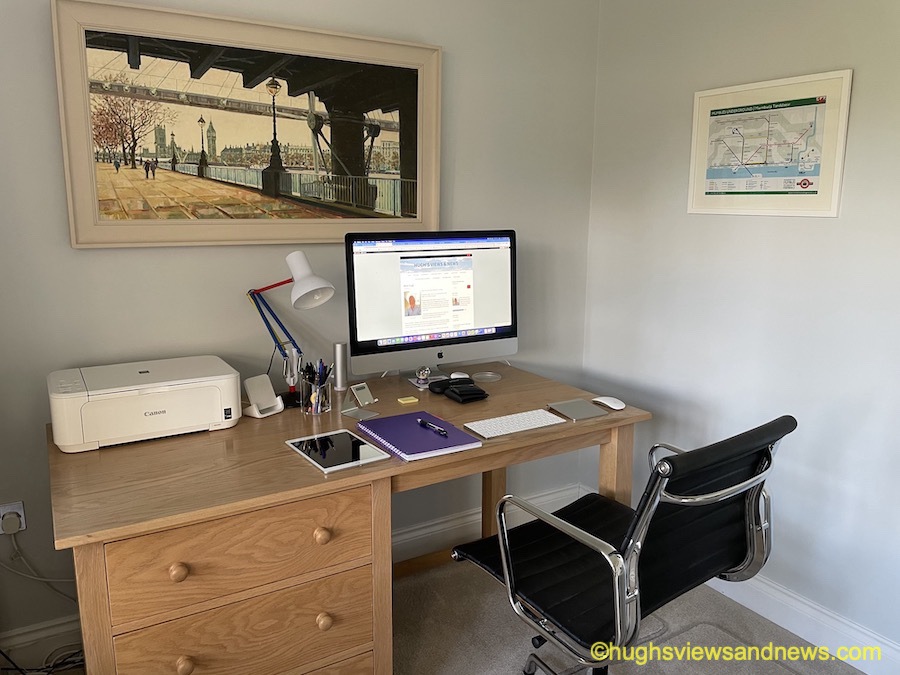
Photo showing Hugh's desk with a computer screen showing Hugh's home page of his blog.
Blogging should always be about enjoyment and fun.

Follow Hugh on Social Media. Click on the links below.

If you enjoyed this post and want more like it, enter your email address and click ‘Subscribe’ to stay up-to-date with my latest content.

Copyright @ 2024 hughsviewsandnews.com – All rights reserved.

Flash Fiction Friday – The Sky That Loves Me

March 27 2023, prompt: Write a story about something impossibly blue in 99 words (no more, no less). You can go with the sky or any other object. What impact does the colour have on the setting or characters? Does it lead to action or create a pause? Go where the prompt leads! See March 27: Story Challenge in 99-words for more details.

The Sky That Loves Me- by Hugh W. Roberts

The sky above was a deep, impossibly blue. The kind of blue that makes you feel like you could reach up and touch it. The type of blue that makes you want to sing.

And then I started to sing. I sang about the impossibly blue sky. I sang about the hope that it gave me. I sang about the love that I felt for the world around me.

And as I sang, the sky seemed to get even bluer. The world seemed to get even brighter. It was then that I decided today was not my suicide day.


Written for the 99-word flash fiction challenge hosted by Charli Mills at the Carrot Ranch.

***


Enjoyed this piece of flash fiction? Then you’ll love ‘More Glimpses.’

***

32 short stories and flash fiction pieces take readers to the edge of their imagination.

More Glimpses

Available on Amazon

Paperback – £4.99

Kindle – £0.99

Follow Hugh on his social media platforms by clicking the buttons below.

Copyright @ 2024 hughsviewsandnews.com – All rights reserved.
Is Blogging Causing You Stress Or Making You Feel Guilty? How To Fix It

What makes you put your head in your hands or shake your head regarding blogging?

Recently, I’ve been shaking my head a lot when visiting the blogging world.

Some of my fellow bloggers worry me, and I’m concerned about their mental health.

I’m witnessing bloggers panicking, stressed, feeling guilty, or apologising because of how they blog.

Banner for the blog post 'Is Blogging Causing You Stress Or Making You Feel Guilty? How To Fix It'
Are you showing signs of stress because of blogging?

Here are some of the bloggers I am referring to. Are you one of them?

The Sprinters

Have you heard this quote?

Blogging is a marathon, not a sprint!

It’s a quote many bloggers acknowledge.

Sprinters rush around the blogging world every day as if they’re on a time challenge where they must read and leave comments on as many blog posts as possible within a certain amount of time.

The comments they leave are seldom engaging and are often empty. Instead of leaving a comment saying why they thought a post was great or why they liked a photo or reading a piece of fiction, they’ll leave a comment like, ‘Great story’ or ‘I enjoyed this.’

They don’t have time to leave engaging comments, so leave comments that’ll not make you want to engage with them other than maybe to say ‘Thanks.’

If they fail to leave comments on all the blogs they’re following, they believe they may upset someone. They need to prove they’ve visited your post, often by leaving an empty comment.

They often show signs of stress or pressure in the content they publish and the comments they leave.

They won’t read long-engaging posts because that wastes time and worsens their stress. They’re on a mission to read as many posts as possible in the time they have so they don’t upset anyone.

Why read a couple of interesting, engaging, long posts when you can read lots of short blog posts in the time it takes to read one fascinating post over 1,000 words that gets you and lots of other readers wanting to get into a discussion?

When I saw the above tweet from James, I punched the air with my fist. He makes a valid point. And it doesn’t only apply to new bloggers.

Blogging should never be about sprinting under pressure around the blogging world to see how many blog posts you can read and comment on in 20 minutes!

Those posts will still be there next week.

There is no such thing as being behind in blogging. Read, respond and leave comments when you have the time to do so.

Hugh W. Roberts

Ask yourself why you started blogging. Was it for enjoyment and fun? Or did you come to the blogging world on a mission to try and break the world record every day for the number of blog posts you can read and comment on so you don’t feel guilty or upset anyone?

Is rushing around the blogging world, feeling stressed out while leaving the same non-engaging short comments, fun?

Slow down, and engage with bloggers rather than trying to prove the point that you have visited their posts.

If you don’t have the time to read and leave comments, make time by reading less blogs.

Hugh W. Roberts

This brings me to…

The obliging blogger

In the next paragraph, I’ll ask you a question. Leave your answer in the comments section before reading the rest of this post.

Question: If a blogger reads and leaves comments on all your blog posts, should you feel obliged to read and leave comments on all their posts?

You won’t be surprised that my answer to that question is ‘No.’

But if you answered ‘Yes’, share your reasons in the comments section.

Nobody should feel obliged to read and comment on another blogger’s posts because they read and leave comments on all their blog posts.

Your time is precious, and wasting it by forcing yourself to read and comment on content that does not interest you is a waste of your time.

“But won’t the blogger who reads and comments on all my posts stop reading and commenting on my blog posts if I don’t return the favour?’

Yes, they may, but does it matter? And if they do, ask yourself this question.

‘Why am I following that blogger?’

If it’s because you genuinely enjoy reading their content, then, by all means, continue to follow them, but don’t feel obliged to read and leave comments on all their posts.

If a blogger gets upset with you for not reading and leaving comments on all their posts, consider unfollowing them.

Allocate the time you spent reading their blogs to the blogs you enjoy reading, and leave valuable, engaging comments on those posts rather than short, empty, non-engaging comments.

Tip: Make the first comment count and show that you genuinely want to engage.

Don’t get too upset if the blogger you’re trying to engage with doesn’t want to engage with you when they respond to your comment with nothing but a ‘Thank you.’

That’s your cue to think twice before engaging with them again.

If you don’t want to engage with a blogger after reading a post, press the like button and move on. After all, that’s why it’s there.

There is nothing wrong with not leaving a comment after reading a blog post if you’ve nothing of value to add. Stop acting like it’s a crime not to leave one.

Hugh W. Roberts

Don’t be tricked into feeling guilty if you don’t always leave a comment. I read many blog posts where I do not click the ‘like’ button or leave comments. Why? Because I have nothing of value to add.

Likewise, never feel obliged to follow a blogger who has followed your blog. There’s no harm in visiting their blog to check out their content. If you like it, by all means, follow back, but don’t follow them simply because they followed you.

The desperate blogger

This blogger comes in two forms.

The first are bloggers you’ve never received comments from, and suddenly they’ll leave a comment and link on one of your posts that begs you (and your readers) to check out their blog, read their posts and leave comments.

I’ve received lots of these types of comments recently.

Their comment won’t mention anything about the contents of the posts they’ve left their comment on, just a few words of desperation and a link to their blog.

You’ll see them leaving the same comment on other blogs. I never approve these comments, so you’ll never see them in the comments section of any of my blog posts.

These types of comments are often left by new bloggers looking for new followers and readers.

If you’re new to blogging, there are much better ways to gain followers and new readers than to leave uninvited links on other blogs. These posts list some tips that will help you gain new followers and readers.

New To Blogging? These Free Tips On Leaving Comments Will Help Bring New Visitors To Your Blog

Are You Struggling To Get People To Your Blog? These 7 Free Methods Will Help

The other type of desperate blogger is someone who has previously left some engaging comments but unexpectedly starts dropping links to their posts that have nothing to do with the content of your post, asking you to read and comment.

I’ve said this many times before. Other blogs are not places for you to leave links unless the host has invited you to leave them. For example, in my Wordless Wednesday posts, I invite bloggers to leave links to their Wordless Wednesday posts.

If you have a post you’d like to share with a blogger in the comments section because it’s connected to their post, ask for permission to leave the link first.

Many bloggers class uninvited links as spam and move comments that include them to the spam folder or bin.

How do you deal with uninvited links left in the comments section of your blog?

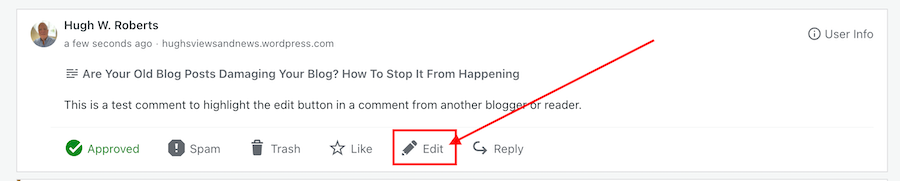
I edit them out before approving the comment by pressing the edit button.

Image highlighting the edit button on a comment on a WordPress blog
Click edit to edit out uninvited links from bloggers

Remember to save the changes and then approve the comment. Most bloggers leaving uninvited links soon get the message.

Let’s wrap it up

  • Never feel pressured to read and comment on too many blog posts when you don’t have the time.
  • Read and leave engaging comments on a few blog posts a day/week rather than try and read and leave empty, non-engaging comments on all the blog posts of those you follow.
  • Never feel obliged to follow a blog simply because they followed you.
  • Don’t force yourself or waste time reading blog posts that do not interest you. Instead, invest your time reading and engaging with bloggers who publish content that interests you.
  • It doesn’t matter if you don’t read a blog post today. It’ll still be there to read in a week or when you have more time.
  • Don’t feel guilty if you do not get around to reading all the blog posts you want to read and comment on.
  • If you have nothing of value to add in a comment, rather than leaving short, empty, non-engaging comments, click the ‘like’ button and move on.
  • Other blogs are not the place to leave uninvited links promoting your blog.
  • Edit out uninvited links before approving comments.
  • Remove any thoughts of thinking you’re behind with blogging and have to catch up. Read and comment on posts when you have the time to do so.

Are there any examples of blogging that have you holding your head in your hands, shaking your head or concerned for other bloggers? Please share them in the comments section.

Follow Hugh on Social Media. Click on the buttons below.

Copyright © 2022 hughsviewsandnews.com – All rights reserved.